Energy

Ingenhousz's Apparatus
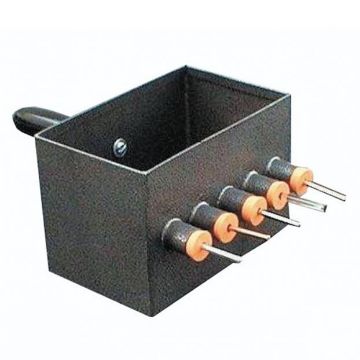
Five rods, one of each aluminium, brass, copper, zinc and iron, embedded along one side of metal tank. Rates of melting compared by placing wax on end of rods thus giving rates of conductivity in the different metals. Dimensions (L x W x H): 150 x 90 x 100mm.
224.50 AED
Wood/Metal Cylinder
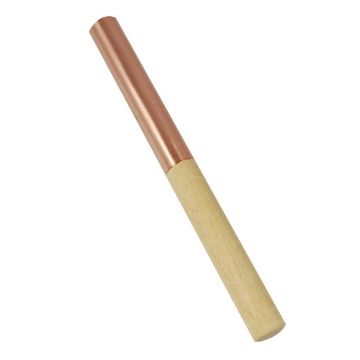
The wood/metal cylinder offers a nice demonstration of conduction and insulation. The apparatus consists of a copper tube attached to a wooden rod of equal diameter. A piece of paper is wrapped tightly around the central section, covering the wood and metal parts, then the rod/cylinder is passed through a Bunsen burner flame for few seconds, making sure both wood and metal parts pass through the flame. The metal part conducts heat away so the paper hardly browns, but because the wood part is an insulator the paper covering gets scorched by the flame. Dimensions (L x Dia.): 190 x 22 mm.
173.12 AED
Ice Melting Kit
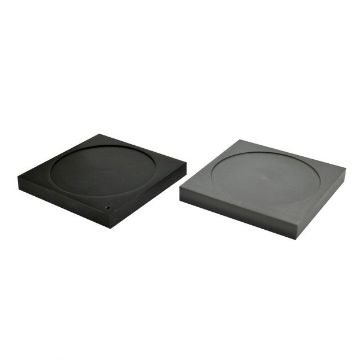
Demonstrates the difference in conductivity of two different substances. Comprises two identical looking square blocks but of different materials, one of thermal conducting material and other of thermal insulating material. On placing ice on both of them, ice melts faster on one of them showing the difference in their conductivities.
137.55 AED
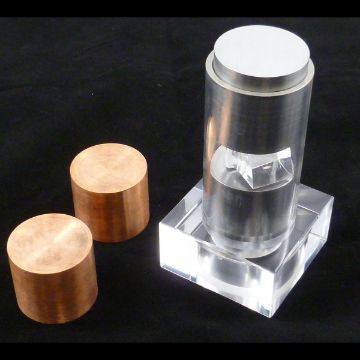
Ice Melting Kit, Advanced
This advanced ice melting kit nicely demonstrates the thermal conductivity of materials by using different types of metal blocks to melt ice cubes. The kit consists of an acrylic base with sump, an acrylic tube, two cylindrical copper blocks and two cylindrical steel blocks. The apparatus is set up by placing one of the copper blocks on top of the acrylic base. The base has an integral sump, which will contain the meltwater from an ice cube. The acrylic tube is then placed over the copper block, in order to contain the metal blocks and ice cube. An ice cube is then dropped down the tube onto the block and the second copper block is placed on top. Immediately the ice begins to melt, due to the high thermal conductivity of copper (along with large thermal mass), and in matter of 10-15 seconds the ice will have melted and disappeared. By repeating the experiment using the steel blocks it can be seen that the ice melts more slowly, due to the lower thermal conductivity of steel. Each experiment can be timed, for more accurate comparison between the two different metals. The kit also includes two plastic insulating discs, which can be placed between the ice and the metal blocks to show that it is not simply the pressure of the top block which is causing the ice to melt. If repeating the experiment using the same blocks, it is better to allow the blocks to come back up to room temperature first (if repeatable results are required). Contents: • Acrylic base and tube • 2 x 0.5 kg copper blocks • 2 x 0.5 kg steel blocks • 2 x plastic insulating discs Also required: Ice cubes, preferably quite large.
282.21 AED
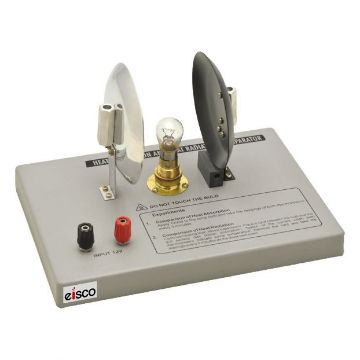
Heat Absorption & Radiation Apparatus
This apparatus offers quick and safe method for demonstrating comparative heat absorption from radiated heat source. The apparatus uses a 12 V 24W bulb as heat source, with parabolic metal dishes for heat absorption one finished in black and one in shiny metal. The dishes include integral holders for thermometers, to allow comparison of temperature readings (thermometers not included). Comes complete with instructions.
200.79 AED
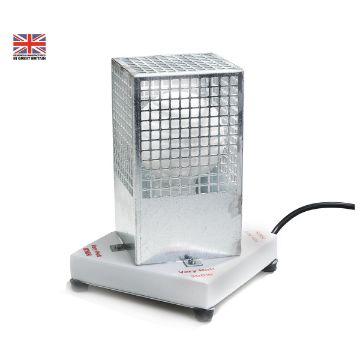
Radiant Heat Source
A safe, compact heat source, ideal for heat radiation experiments in schools. Comprising a base and cage enclosing a custom IR radiating lamp of the dull emitter type. • 300 W power output • Dimensions (W x D x H): 150 x 150 x 220 mm
948.60 AED
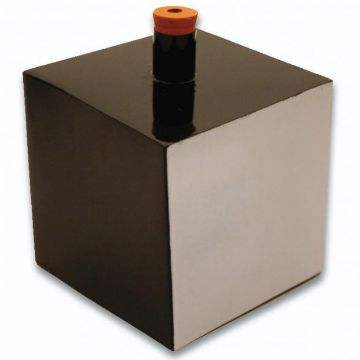
Leslie Cube
A 10 cm cube with surfaces: dull black, shiny black, white and copper. The opening on top allows the cube to be filled with hot water, and the lid reduces both heat loss and the risk of spillage.
267.98 AED
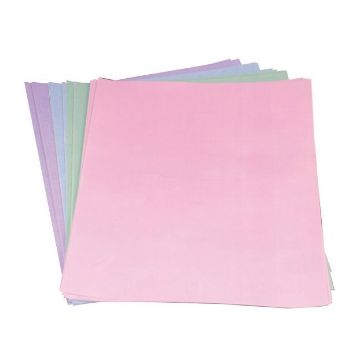
Heat Sensitive Paper
A novel way to investigate temperature, insulation, and body temperature. Heat sensitive thermochromic paper changes colour as the temperature rises, even from the heat of your hand. The paper is supplied in four colours blue/white, purple/pink, pink/white and green/yellow. Dimensions (L x W): 297 x 210 mm.
319.36 AED
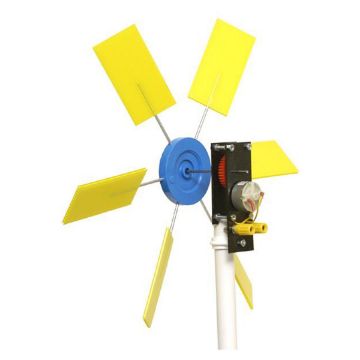
Wind Turbine Kit
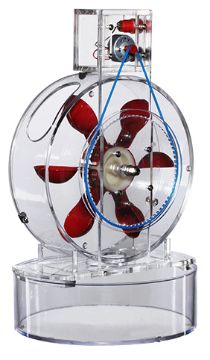
This wind turbine can be used to carry out wide range of experiments on wind power. The blades of the wind turbine can easily be attached, removed or adjusted, allowing students to investigate the effects of changing the number, pitch, size and shape of the blades. Some of the effects can be quite counter-intuitive and require students to think carefully about the concepts of energy and power. With mm sockets attached for easy connection to other equipment, the electrical output is DC. Assembly required. Contents: generator assembly 1, support post 1, turbine hub 1, turbine blade posts 6 and turbine blades 6.
258.89 AED
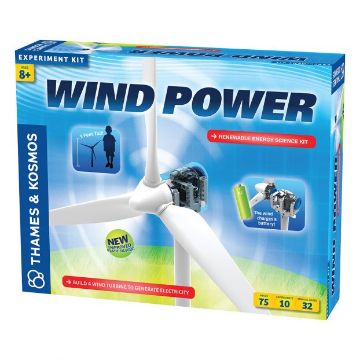
Wind Power Renewable Energy Kit
Wind is one of the most promising sources of clean, renewable energy available today. Wind energy has been used for centuries to pump water and crush grain in windmills, and is now increasingly being used to generate electricity to power our modern world. Using this kit you can assemble a wind turbine complete with electric generator, adjustable rotors, and wind speed indicator, then conduct more than 20 experiments with your wind turbine. Experiment with different numbers of rotor blades, different blade angles and profiles, different wind speeds, different gear ratios etc. Use the wind turbine to generate mechanical power to lift heavy weight or generate electricity to light up an LED and charge rechargeable battery. Includes full-colour, 32-page experiment manual with illustrated instructions and scientific information. • Build working wind turbine • Harness mechanical energy to lift weights • Generate electricity to light an LED and charge battery • Learn the physics of wind turbines • Discover how wind occurs and why it is such promising energy source • Learn about the physics of force and motion as it applies to wind power technology. • Learn how to measure and calculate the different forces acting on the rotor blades by breaking them down into vectors • Discover how the sun makes the wind, providing us with an endless source of energy • Read about different types of wind turbines and windmills
332.01 AED
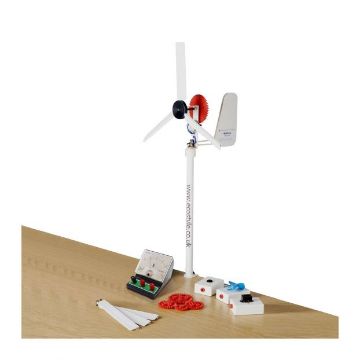
Wind Turbine Kit
Developed with the National Energy Foundation, this quality, easy to use Wind Turbine Kit is a working model of a real wind turbine. Hands-on and fully interactive, the kit shows how wind power can be harnessed to generate electricity. The kit can be assembled in minutes, is easy to use and has been designed for use in schools, colleges and universities. The wind turbine can be used indoors with a fan, or outdoors in the wind to power the electric motor, buzzer or LED, or can be connected to the voltmeter to measure the amount of electricity generated. The rear vane automatically turns the wind turbine towards the wind, even if the wind changes direction. The turbine hub offers combinations of two, three or six blades and the blade angles can be easily adjusted to discover which configuration gives the greatest electrical output. The kit includes a set of four gears which can be easily interchanged to test different gear combinations e.g. ratios of 3:1, 1:1 and 1:3, to discover what effect this has on the power generated. Packed weight: 1.29 kg The kit contains: • Two-part wind turbine (600 mm high) consisting of nacelle (top), and tower (base) • Integral clamp to secure the wind turbine to table top or bench etc. • Six turbine blades • Motor module • LED module • Buzzer module • Dual-scale analogue voltmeter • Brass-hub gears: 60-tooth, x 40-tooth, and 20-tooth with 1.5mm hex key • Operating and assembly instructions • Cardboard storage case
1162.50 AED
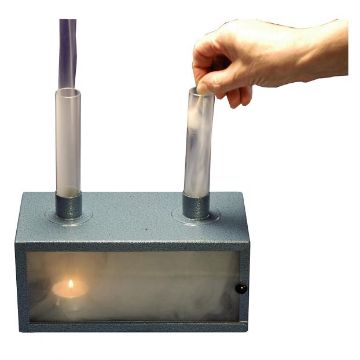
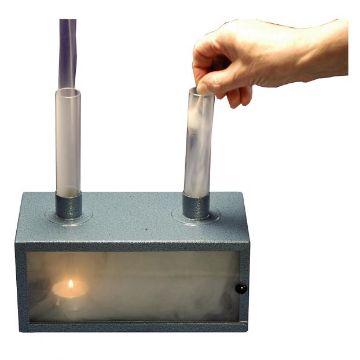
Convection In Air (Mine Shaft) Apparatus
Consists of a metal box with a sliding glass front and two detachable glass chimneys. A lighted tea light (night light) is placed beneath the base of one chimney to create convection currents. (Tea lights not supplied). Dimensions (L x H x D): 240 x 90 x 70mm.
182.61 AED
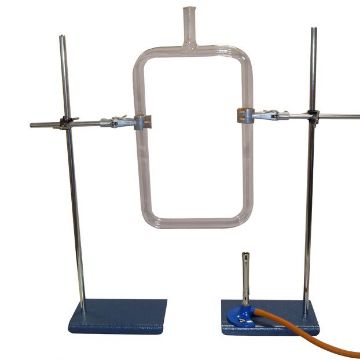
Convection In Water Apparatus
Consisting of rectangular glass tubing. Dimensions (W x L x Dia.): 210 x 360 x 22mm.
203.95 AED
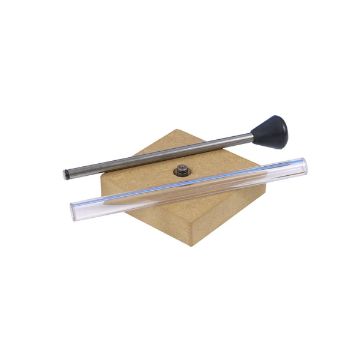
Hyman Fire Piston
This apparatus vividly demonstrates the rise in temperature that occurs when a fixed mass of air in a transparent cylinder is compressed by a hand operated piston. A piece of tinder, which is provided, ignites in the transparent cylinder: much as a diesel engine obtains ignition. The cylinder and piston can also be used to demonstrate the effect of decompression, being the immediate lowering of temperature and the consequent condensation of water vapour inside the cylinder the cloud formed can easily be seen. Cylinder Dimensions: (L) 198.00 mm (OD) 15.00 mm (ID) 9.00 mm
290.11 AED
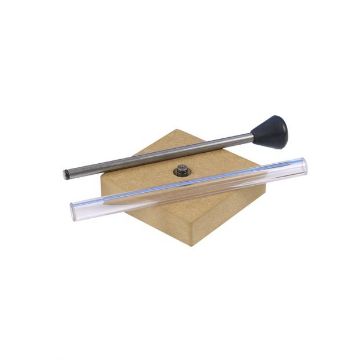
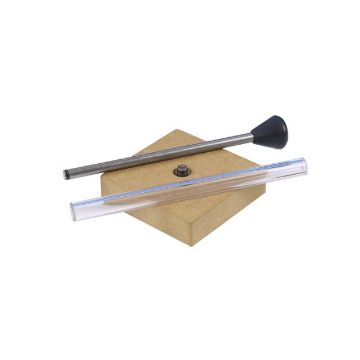
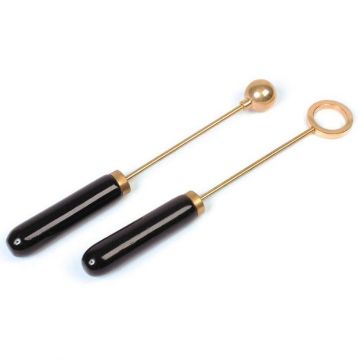
Ball and Ring
Two-piece set. Brass ring and brass ball mounted in wooden handles. Dimensions (L): 260 mm.
52.96 AED
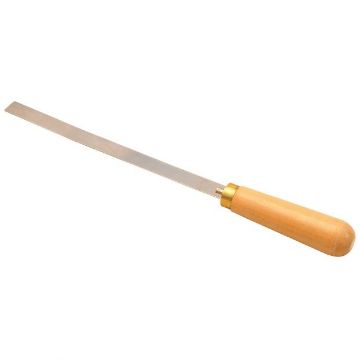
Bimetallic Compound Bar, Premium
An improvement on the riveted version, this bonded copper and steel bimetallic strip comes mounted in a wooden handle for ease of use. Heating on either side causes the strip to bend as the two metals expand by different amounts. Comes with instructions. Dimensions (L incl. handle): 300mm); Bimetallic Strip (L x W) 200 x 13 mm.
86.56 AED